
Year
1930
Date
Not specified
Category
Culture
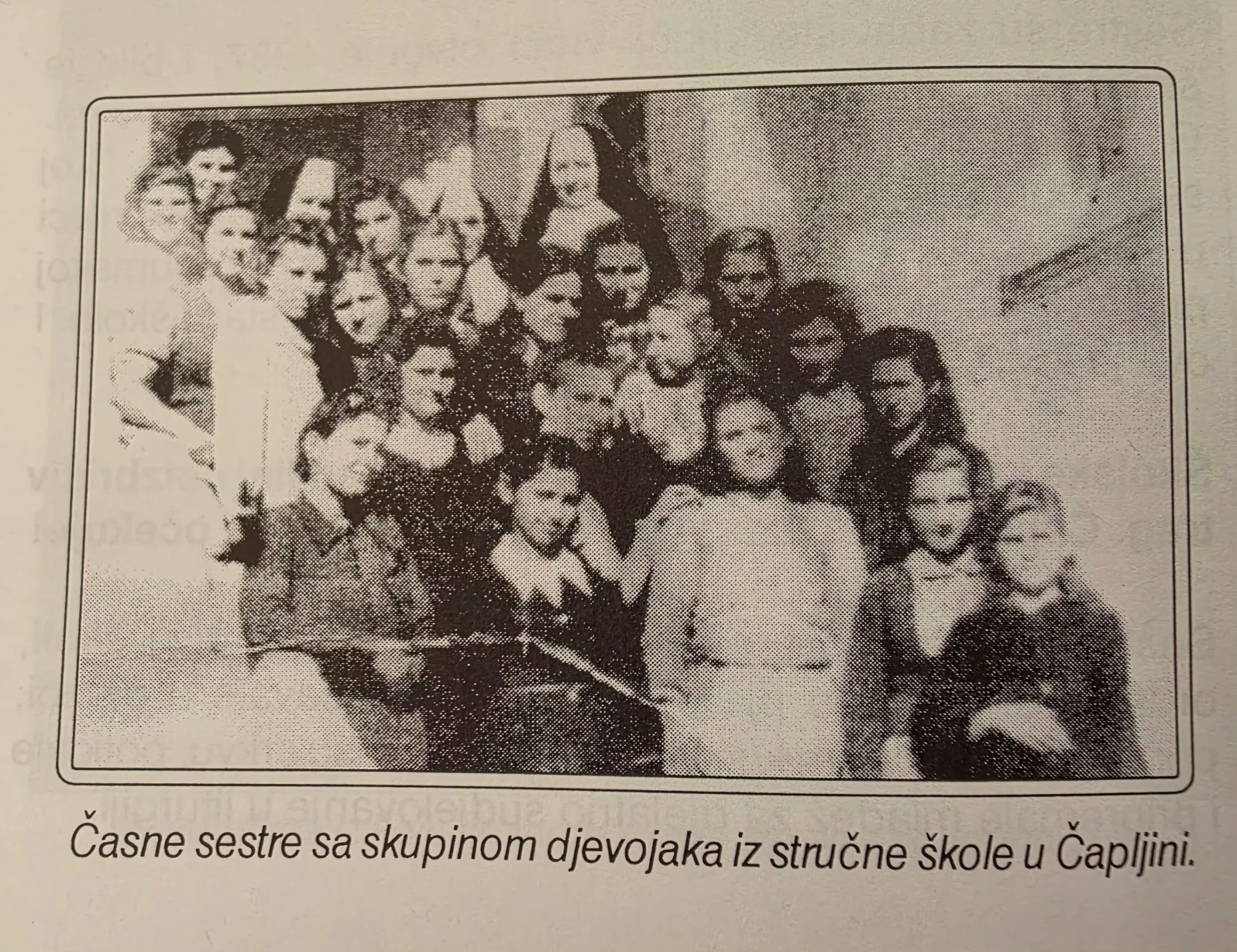
In Čapljina in 1936, Father Fra Andrija Jelčić came as the parish priest, the builder of the Čapljina church and Franciscan residence. Father Andrija, as a man of God, knew well what the presence of sisters in a place meant for religious and cultural life. He succeeded, with the support of the then provincial Fra Mate Čuturić and...
In Čapljina in 1936, Father Fra Andrija Jelčić came as the parish priest, the builder of the Čapljina church and Franciscan residence. Father Andrija, as a man of God, knew well what the presence of sisters in a place meant for religious and cultural life. He succeeded, with the support of the then provincial Fra Mate Čuturić and the local bishop Fra Alojzije Mišić, as well as the then provincial S.M. Gertrude Neuwirth, to enable the arrival of the Franciscan sisters from Mostar to Čapljina in August 1936.
He rented a house with a yard (area of 2,480m²) from Mrs. Lujza Kestler. At that time, this house was the most beautiful in Čapljina and in the best location, not only physically but also because of how much good it brought through the work of the Franciscan sisters at that time. The sisters lived in that rented house, opened a private women's vocational school in it, and what was then called a "kindergarten," or today's preschool.
The Ministry of Trade, Industry and Crafts in Belgrade, as well as the Ministry of Education, also in Belgrade, in 1936 granted the sisters' women's vocational private school and kindergarten in Čapljina the right to public operation.
The sisters lived and worked in the Kestler house until mid-1942 when they had to move to the old Čapljina school due to constant threats from partisans, which was then located in today's Zrinsko-Frankopanska Street, above the overpass in Čapljina. There they continued to work until October 1944, until the arrival of the partisans. The old Čapljina school was demolished in 1955 because it was an obstacle in the construction of a new railway line in Čapljina.
The sisters' school in Čapljina had two preparatory classes and three classes of vocational education. Only those girls who had completed four years of elementary school could enroll in the preparatory classes.
The sisters worked in two shifts; morning and afternoon. In each class, they had up to thirty students, and in the preparatory class, somewhat more. Along with Catholic girls, a smaller number of girls of Islamic faith attended the school, which indicates the community and respect that the sisters brought to the town.
The sisters opened the kindergarten in 1937, and there were sixteen children aged two and a half to seven years, while the following year that number doubled, and every subsequent year the number of children changed from year to year. When the sisters had to move to the old Čapljina school, the kindergarten was relocated to the basement premises of the Radoš family who lived next to the old school. As mentioned earlier, the demolition of the old school also led to this house being demolished at that time.
Along with their main occupation in the kindergarten and school, the sisters organized choir singing in the parish, taught music, assisted in the parish household, and maintained the church, encouraging and preparing the youth for active participation in the liturgy.
During those nine years when the School Sisters of St. Francis operated (from August 1936 to February 1945), we do not have accurate information on which sisters were in our town due to the lack of documentation from this period. What we know is that there were regularly four sisters, and we know who the house superiors were:
1. S.M. Rozmila Dugandžić (1936 – 1940)
2. S.M. Krunoslava Pehar (1940 – 1943)
3. S.M. Filomena Dugandžić (1943 – 1944)
4. S.M. Jeronima Begić (1944 – 1945)
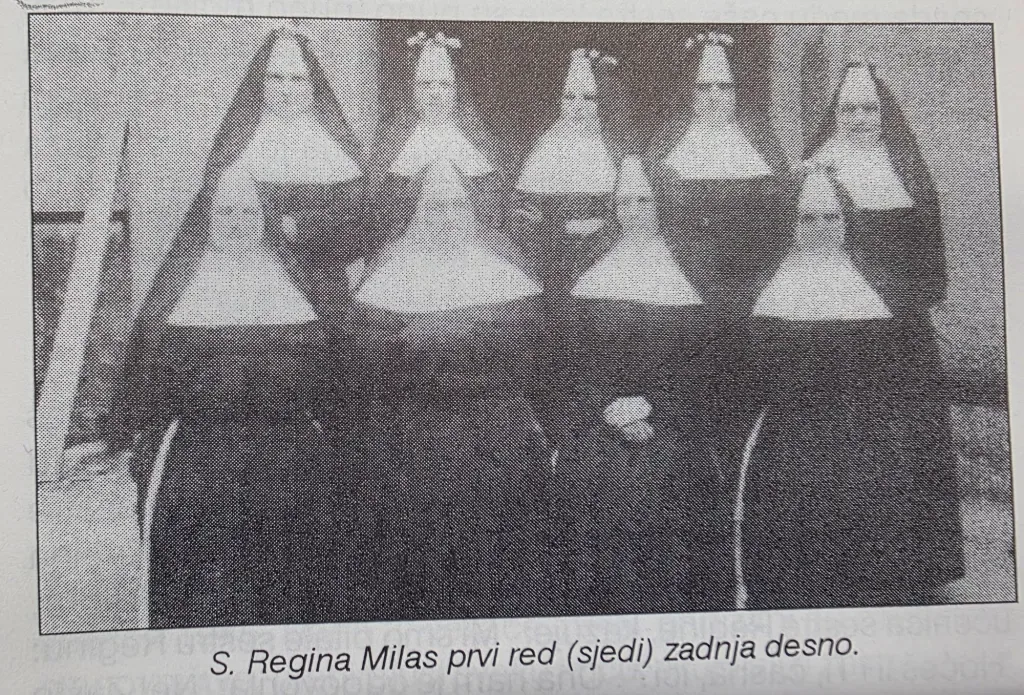
Due to the lack of documentation, the people of Čapljina have great memories of other School Sisters of St. Francis: S.M. Trpimira Obućina (musician and director of the sisters' school), S.M. Mirjam Boras (taught "accounting," today's mathematics), S.M. Slavka Šmercer (professional sister from Belgrade), S.M. Imakulata Zujić (worked in the kindergarten from Imotski), S.M. Josipa (surname unknown, as well as other details, except for origin; Slovenia), S.M. Regina Milas (professional sister who became a legend of Čapljina due to her honorable end, whose square we have behind the church).
The Congregation of School Sisters of St. Francis of Christ the King has its roots in 1843 in Graz. The original goal and charism of this Congregation is to follow the ideal of St. Francis of Assisi, living the Rule of the Third Order of St. Francis, helping in knowledge and education those who were deprived of education for any reason.
Today, the School Sisters of St. Francis of Christ the King are a memory of this town on four rivers, of nine years of resistance, perseverance, and courage. The square of Sister Regina Milas is an eternal proof that her martyr's death will certainly be remembered.
Move to the neighbouring archive entries in chronological order.