
Year
1900
Date
Not specified
Category
Famous Čapljina people
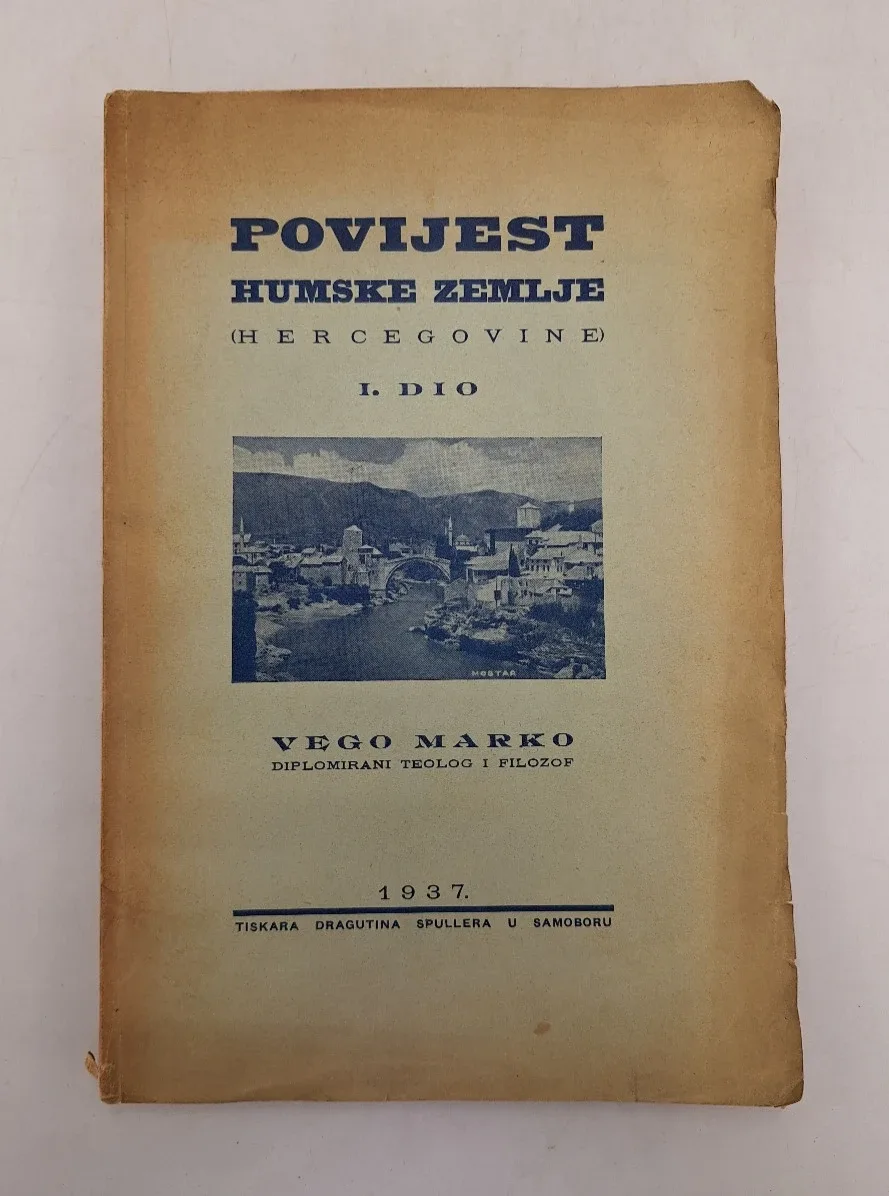
Marko Vego (January 8, 1907 – February 26, 1985) was a Bosnian-Herzegovinian and Yugoslav archaeologist, epigrapher, and historian. Biography He was born in Čapljina, in the family of his father Jozo, a worker at the tobacco station. He completed classical gymnasium in Široki Brijeg and then studied theology at the University of Freiburg (Germany) and the University of Zagreb.
Marko Vego (January 8, 1907 – February 26, 1985) was a Bosnian-Herzegovinian and Yugoslav archaeologist, epigrapher, and historian.
He was born in Čapljina, in the family of his father Jozo, a worker at the tobacco station. He completed classical gymnasium in Široki Brijeg and then studied theology at the University of Freiburg (Germany) and the University of Zagreb. He graduated from the Faculty of Philosophy at the University of Zagreb and passed the teaching exam in Belgrade.
At the Faculty of Philosophy in Zagreb, he wrote a doctoral dissertation titled “The History of Hum Land from the Settlement of the Slavs to the Unification with Bosnia in 1322”, but due to unexplained circumstances, he did not defend it.
From 1938 to 1944, he worked as a history professor at the State Real Gymnasium in Nikšić (Montenegro). He also participated in the resistance movement during World War II. In 1945, he became the director of the Partisan Gymnasium in Trebinje.
In the period 1946–1947, he was the director of the State Real Gymnasium in Mostar, and then a professor at the Teacher Training School in Sarajevo. From 1949 to 1950, he served as the director of the Teacher Training School in Sarajevo.
From August 28, 1950, to December 9, 1957, he was the director of the National Museum of Bosnia and Herzegovina in Sarajevo.
He retired in 1965. For his scientific work, he received several awards in Bosnia and Herzegovina, among which the “July 27” award stands out.
Vego primarily dealt with the medieval period and is particularly known for his research in the fields of archaeology, numismatics, epigraphy, and the topographical history of medieval Bosnia. He published more than 300 scientific papers and books.
He passed away in Sarajevo on February 26, 1985.
Marko Vego left a deep mark in the study of medieval history of Bosnia and Herzegovina and is considered one of the most important researchers of that period in the 20th century.
Move to the neighbouring archive entries in chronological order.