
Year
1910
Date
Not specified
Category
Sport
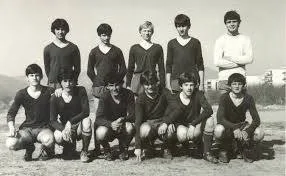
HNK Čapljina is a football club from Čapljina in Bosnia and Herzegovina. The club was founded in 1945. In the former Yugoslavia, it competed under the name Borac. Among the notable players who originated from Čapljina are Nino Bule, Želimir Terkeš, Dadi Mulaić, Vinko Martinović, Mladen Bartolović, Vjeko Sušac, Tomo Ra...
HNK Čapljina is a football club from Čapljina in Bosnia and Herzegovina.
The club was founded in 1945. In the former Yugoslavia, it competed under the name Borac. Among the notable players who originated from Čapljina are Nino Bule, Želimir Terkeš, Dadi Mulaić, Vinko Martinović, Mladen Bartolović, Vjeko Sušac, Tomo Raguž, Boris Raič, Nikola Michellini, Sabahudin Jusufbašić, Armin Mahović, Mirsad Fazlagić, Ismet Šišić, Božo Limov, Emir Ćerić, Željko Kuljanin, Zlatko Križanović, goalkeeper Zlatko Vego, and Lujo Ilić. Former player Ćerić played for Cosmos alongside Pelé, and among active players who originated from this club, Luka Menalo stands out. The traditional colors of the club are blue, white, and red, and they play their home matches at the Bjelave stadium.
The first mention of the modern form of sport in the Čapljina area is linked to the end of the 19th and the beginning of the 20th century. During the Austro-Hungarian period, the first sports groups were established, mainly related to schools, and alongside various athletic disciplines, ball games were also mentioned. The first mention of football and the founding of a football club dates back to 1919 and is associated with Aleksa Spahić from Čapljina. Spahić, as a student in Prague, brought the first football to the Čapljina area that year, and already in the autumn, a club was founded under the name "Uskok," named after the Neretva Uskoks.
Alongside the name "Uskok," the club also had a popular name "Valok" or "Valog," derived from the Czech word válka, meaning war, thus the name signified a warrior. This name was quite popular, and it is recorded that "Valog" played matches against Herzegovina clubs such as Zrinjski, Velež, and Leotar. The first football field was located on the left bank of the Neretva, in Tasovčići, near the former wooden bridge, in the area where the business zone is located today.
In the early 1930s, another club named FK Jugoslavija was founded in Čapljina, initiated by the then-political structures. It is recorded that in 1934, this club hosted Mostar's Zrinjski and lost with a score of 0:3.
After the end of World War II, in 1945, the Workers' Sports Society "Borac" was founded. In 1950, the Youth Football Club "Mladost" was also founded, which soon merged with Borac. Until 1955, the clubs played at the field in Tasovčići, and after the construction of the stadium in Bjelave, they moved to the right bank of the Neretva, where the stadium is still located today.
"Borac" participated over the years in the Republic League of BiH, then in the II zone, and in 1960 and 1966, it participated in the qualifications for the Second Federal League. From 1968 to 1973, it played in the Second Federal League – group Jug. After the reorganization of leagues, it lost its second-league status and continued competing in the Republic League of SR BiH until 1988, when it moved to the Inter-Republic League – group Jug.
At the beginning of the war, at the end of 1991 and the beginning of 1992, sports activities in Čapljina were interrupted. Already during the summer of 1992, the club's activities began to be renewed, and at the founding assembly, the club was named Croatian Football Club "Čapljina." The club then joined the competitions of the Football Association of Herzeg-Bosnia, where it competed until 1999, when it secured promotion to the First League of BiH. This was the first joint post-war competition at the state level.
In the years following that, HNK Čapljina competed in the First League of the Federation of BiH and in the Second League – group Jug.
Move to the neighbouring archive entries in chronological order.